
Neighborhoods
Planning District I has single and multiple family housing with densities higher than any other area in the City. It is made up of several unique and distinctly different neighborhoods. The oldest residential areas are the Southeast Community, the Downtown and the North End/Huntington Heights Community. North End/Huntington Heights is listed on the National and State Register of Historic Places as well as receiving a local historic designation by the City. The older residential areas of the Planning District were laid out in the early 1900s in the grid pattern of development.
North End/Huntington Heights, Downtown, and Chesapeake Avenue
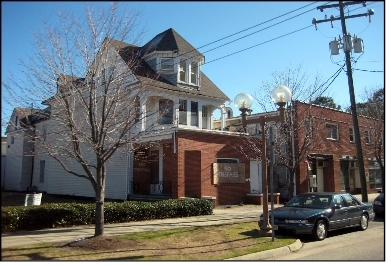
Large stately homes were constructed in the North End/Huntington Heights neighborhood, in Downtown along West Avenue and on Chesapeake Avenue. Unfortunately, over the years, many of the West Avenue homes were torn down.
The North End/Huntington Heights and Chesapeake Avenue neighborhoods once experienced pressure to convert homes into other uses. However, both neighborhoods resisted the pressure by correcting the zoning to single family residential.
Maintaining older neighborhoods as single family areas invites people who are willing to improve their homes. It attracts young families looking to purchase an older, larger home who could not afford a new one. It also reduces overcrowding and thwarts deterioration.
Local historic districts should be created in the older residential areas of the Planning District to assist in their preservation.
New housing in the Planning District should be located as recommended by the LDR Maritime Center Plan and the Southeast Community Urban Waterfront Design Study.
Southeast Community
The Southeast Community is the largest community in the district. It is uniquely urban, with small corner markets at the end of many blocks. The original homes in the area relied on the street as a focal point of activity. Therefore, front porches are an important design feature. Although the majority of these homes remain, many need repair. Street activity, such as walking and talking with neighbors, is still very much a part of this community.
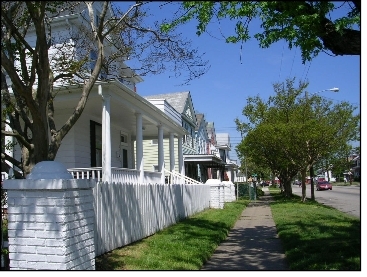
The Southeast Community falls under the umbrella of the Neighborhood Conservation District. This is an overlay district designed to preserve older residential neighborhoods. The intent of the overlay district was to eliminate the construction of one story single family structures on very narrow 25 foot wide lots, which created overcrowded conditions and blight.
Housing, new zoning and other development regulations still are needed to better reflect and respect the community's urban character. The zoning of the Southeast Community should not be the same as in other residential areas of the City. It should allow for corner markets in neighborhoods, eliminate random, surface parking lots within residential blocks for commercial uses, regulate the introduction of a multiple family uses and eliminate off-street parking requirements in designated commercial areas.
The neighborhood conservation district should be amended to regulate design in an effort to blend the old with the new and maintain symmetry. Regulation of design should include examination of building setbacks, height, placement of windows and conformity in architectural style.
In 1997, a comprehensive rezoning brought zoning in line with the adopted comprehensive plan. The practice of building single family detached residential development on 25 foot wide lots was eliminated; and, the minimum lot width for single family detached residential construction was changed to 50 feet.
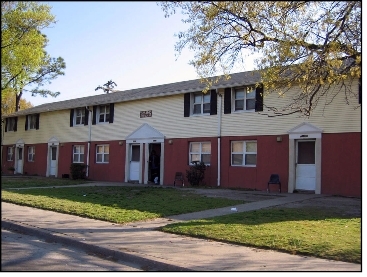
However, Planning District I remains impacted by concentrations of public and subsidized housing. As a result, the community has large concentrations of low income residents. Minimizing public and subsidized housing concentrations should be accomplished. Reducing concentrations of poverty will improve the community's stability and safety. The following should be accomplished to improve the Southeast Community:
- Neighborhood redevelopment plans should guide redevelopment in the District.
- The urban character should be preserved, with corner markets as a thriving part of each.
- Steps should be taken toward improving the District's overall appearance, which should be enhanced through vigorous code enforcement, maintenance of public facilities, parks and rights-of-way.
- Residential densities should be increased in certain areas such as the downtown and the waterfront.
- Deteriorated multi-family housing should be replaced with a variety of housing opportunities that would assist in increasing neighborhood stability and attracting middle-income families back to the Southeast Community.
- Harbor Homes and Dickerson Courts should be demolished and redeveloped after the city has conducted a study that would determine the highest and best use for the site.
Jefferson Park
Jefferson Park was laid out in the grid pattern of development. Although 25 foot wide lots were permitted, many of the homes were developed on larger lots, usually on 50'x100’ lots with driveways. Many of the people who settled the Jefferson Park neighborhood were former residents of Mulberry Island, which was purchased by the federal government in 1918 as the site of Fort Eustis. Descendants of the original Mulberry Island families that settled the neighborhood continue to make their homes in Jefferson Park.
Since the neighborhood was founded, residents have struggled to obtain infrastructure improvements. The neighborhood had open ditches on most of the streets and narrow street pavement, making it difficult for cars to park or pass on the street. In response, the City installed storm drains and sidewalks east of Jefferson Avenue.
The neighborhood is still impacted by traffic from the Shipyard office building which is nearby. This should be minimized by prohibiting through traffic on most streets. The Jefferson Park community has benefited by aggressive enforcement of City codes and ordinances and removal of junkyards from the area.
In 2006, the Newport News City Council approved the South Jefferson Park Redevelopment Plan under Title 36 of the Virginia State Code. The plan proposes to purchase and demolish deteriorated buildings and vacant properties and redevelop the properties with uses that are compatible with the existing single family residential development of the Jefferson Park neighborhood. The redevelopment area consists of properties located within the 600 block from 39th Street to 41st Street bounded by Jefferson Avenue on the west and Madison Avenue on the east. The plan enables the Newport News Redevelopment and Housing Authority (NNRHA) to accomplish the following: 1) purchase dilapidated and vacant properties; 2) provide funding for the renovation of homes and the development of new homes to beautify Jefferson Park; and 3) support the civic league to take action and prevent the further decline of the neighborhood.
Newmarket
The Newmarket community was built under current zoning ordinance requirements. It has small homes on 6,600 square feet or larger lots. Some neighborhoods in the community are showing signs of deterioration. Stabilizing those neighborhoods and protecting them from further deterioration should be a priority. The introduction of new community facilities and the retention of the former Newport News General Hospital as a medical facility are important for stabilizing the area.
Mobile Homes
Several mobile home parks are located in Planning District I west of Jefferson Avenue, including the Circle Mobile Home park. Other mobile home parks along the corridor are deteriorating. Removal of deteriorating mobile home parks along Jefferson Avenue will free up valuable land with rail and major arterial access for economic development.